

Covered calls can be an effective way to generate income from a stock portfolio. However, options trading can feel intimidating—especially for investors without experience. While covered calls are generally considered one of the more conservative options strategies, building a reliable income stream still requires skill and discipline.
This is where a covered call advisor may help.
Let’s explore what covered call advisors do, how they add value, and what to consider before working with one.
What is a Covered Call Advisor?
A covered call strategy involves selling (or “writing”) call options against stocks you already own. When you sell a call option, you collect the option premium upfront. You keep that premium regardless of what happens next. However, if the stock rises above the strike price, you may be required to sell your shares at that price.
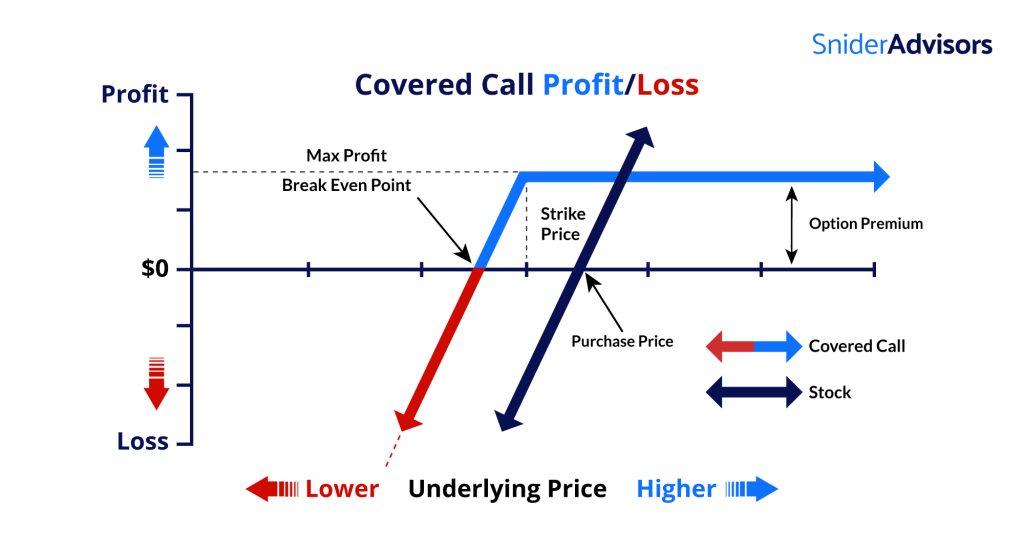
Covered call option diagram showing breakeven and max profit.
Although covered calls are often described as straightforward, successful implementation involves more than simply selling options. Investors must make informed decisions about:
- Stock selection
- Strike prices
- Expiration dates
- Position sizing
- Risk management
- Adjustments during market volatility
A covered call advisor is a financial professional who specializes in helping investors design and manage portfolios that use this strategy. While most advisors are comfortable with traditional stock and bond allocations, fewer have deep experience with options-based income strategies.
In environments where dividend yields and fixed-income returns are limited, this expertise can be especially valuable.
Why Work with a Covered Call Advisor?
Writing covered calls on a single stock is relatively simple. Designing and maintaining a diversified portfolio specifically for covered call income is more complex.
Common questions investors face include:
- Which stocks are appropriate for covered calls?
- What strike prices and expiration dates should be used?
- How much capital should be allocated to each position?
- How should positions be managed if the stock rises sharply?
- What adjustments should be made if the stock declines?
- How many contracts should be written per holding?
An experienced advisor can help answer these questions within a structured framework. Some advisors also provide proprietary tools, portfolio management services, or education to help investors execute the strategy consistently.
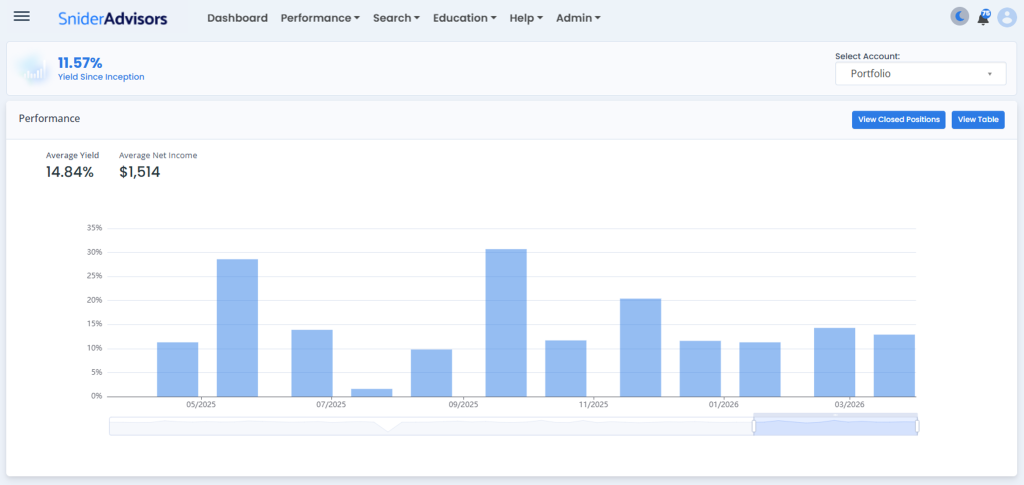
Snider Advisors’ SIM Hub trading software makes it easy to find, execute, manage, and track covered call trades.
Tips for Choosing a Covered Call Advisor
When evaluating covered call advisors, your required due diligence depends largely on the services you want. Investors purchasing covered call strategies or educational courses should start by seeking out companies with free e-courses or “try before you buy” options. That way, you can determine if the content is right for you before making any financial commitments.
If you’re using asset management services, you should always check a financial advisor’s Form ADV to understand the fee structure, potential risk factors, conflicts of interest, disciplinary information, and whether the individual or firm has filed for bankruptcy. Roughly 7% of financial advisers have a record of misconduct, and at some major firms the share is over 15%, so it’s worth checking their background.
Also, working with anyone that is unregulated is very risky. Legitimate financial advisors will be registered with either the SEC or their state’s regulatory agency. There is no excuse for an honest person providing investment advice not to be registered with the proper authorities.
If you need more comprehensive financial planning services, you may also want to look into an advisor’s experience and expertise in wealth management, estate planning, or other areas. While all advisors require a Series 65 or 66 license, some go further with CFA, CFP, or ChFC credentials that provide extra knowledge in these areas.
How to Get Started
Working with covered call advisors can be an excellent way benefit from the experience and expertise of investment professionals while using your portfolio to generate income. After identifying a potential advisor and conducting some due diligence, the next steps typically involve setting up a brokerage account or a managed account with the advisor.
At Snider Advisors, we provide a range of different choices depending on your goals. Our free e-courses require little more than a brokerage account to get started. If you plan on implementing the Snider Investment Method, you may also want to consider setting up an account in the SIM Hub to benefit from our trading software.
Of course, our asset management services include more than just covered call trading. We help with everything from Social Security planning to tax guidance with options for business owners, elderly couples, or family offices. The onboarding process for these arrangements begins with a consultation and involves a more personalized process.
The Bottom Line
Covered calls enable you to generate income from a stock portfolio. While they’re a low-risk and straightforward strategy, building and maintaining a portfolio capable of generating steady income is a more complex, but worthwhile, endeavor. Fortunately, covered call advisors can help provide the knowledge, software, and portfolio management to assist.
Snider Advisors is a leading covered call advisor providing a wide range of options, from comprehensive education for DIY investors to asset management services for hands-off investors. If you’re interested in learning more, start with our free e-courses to get a solid base understanding or inquire about our asset management services.